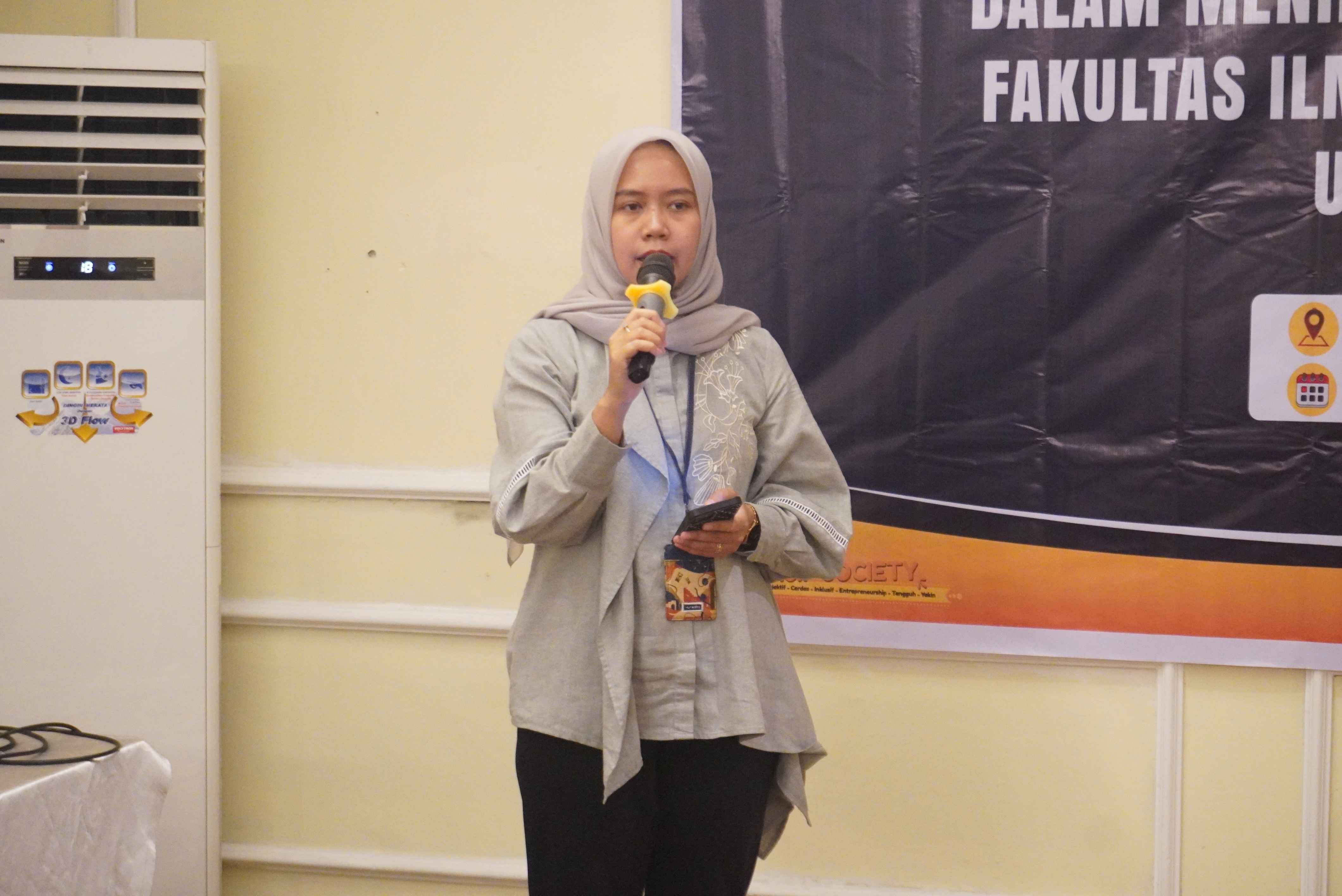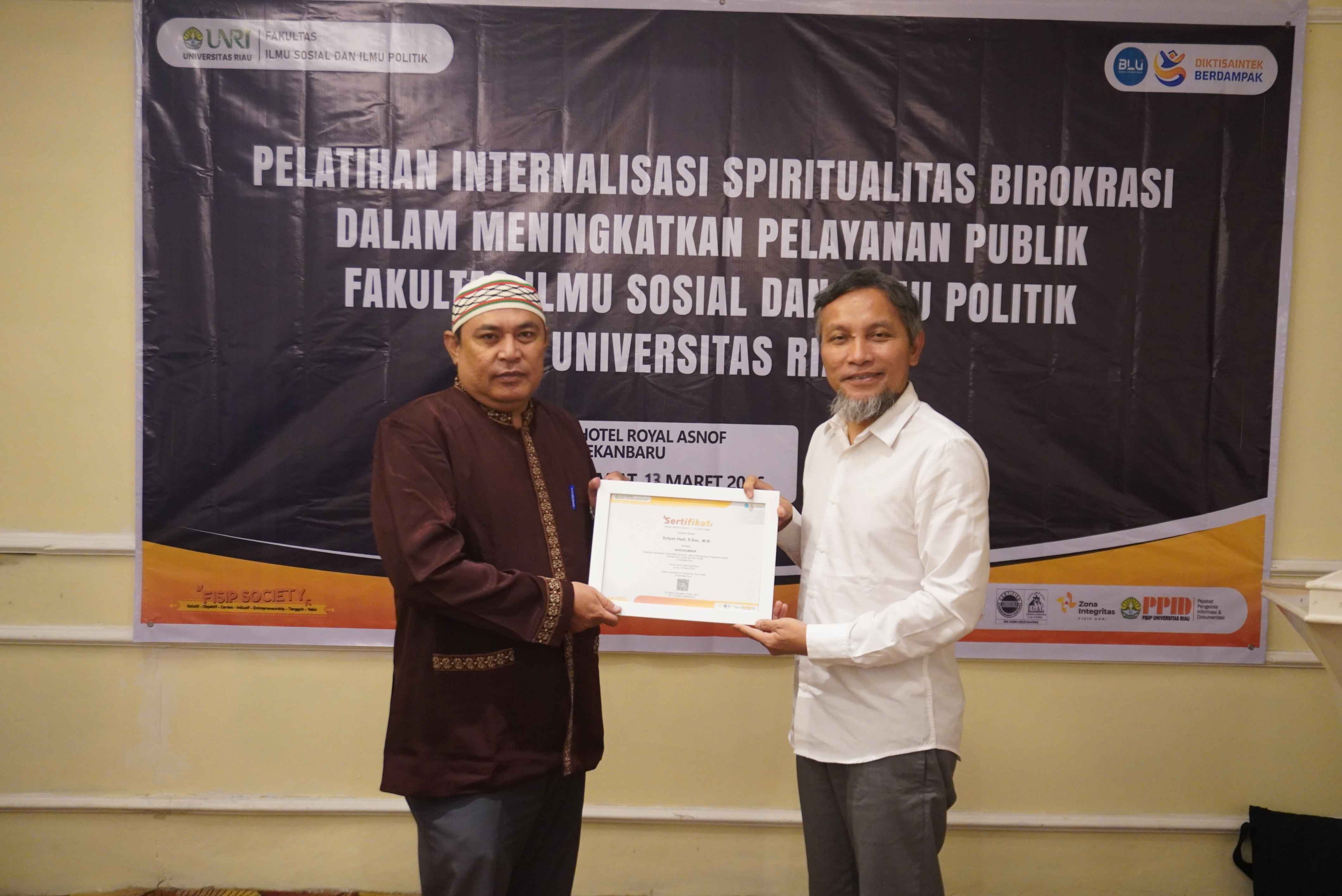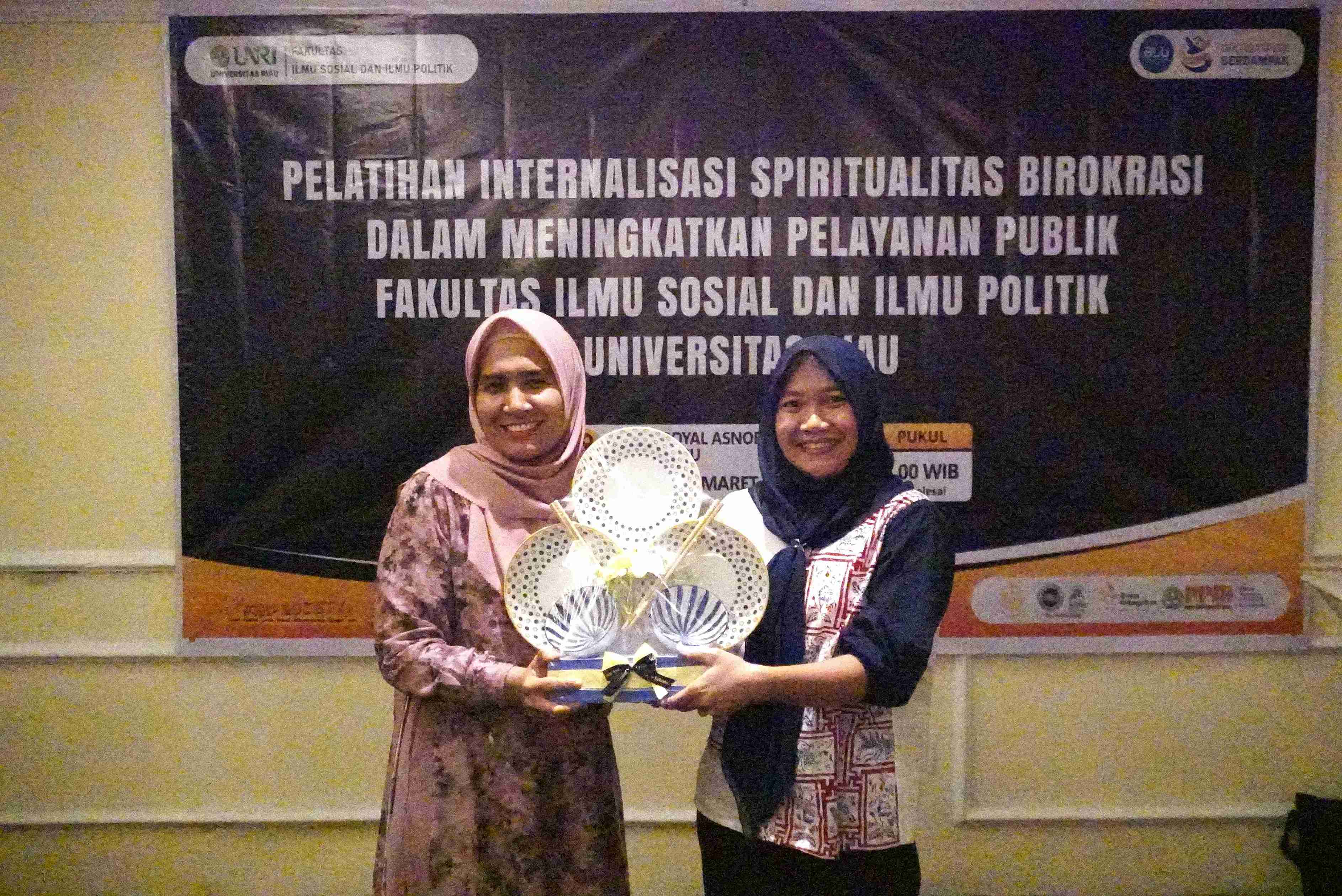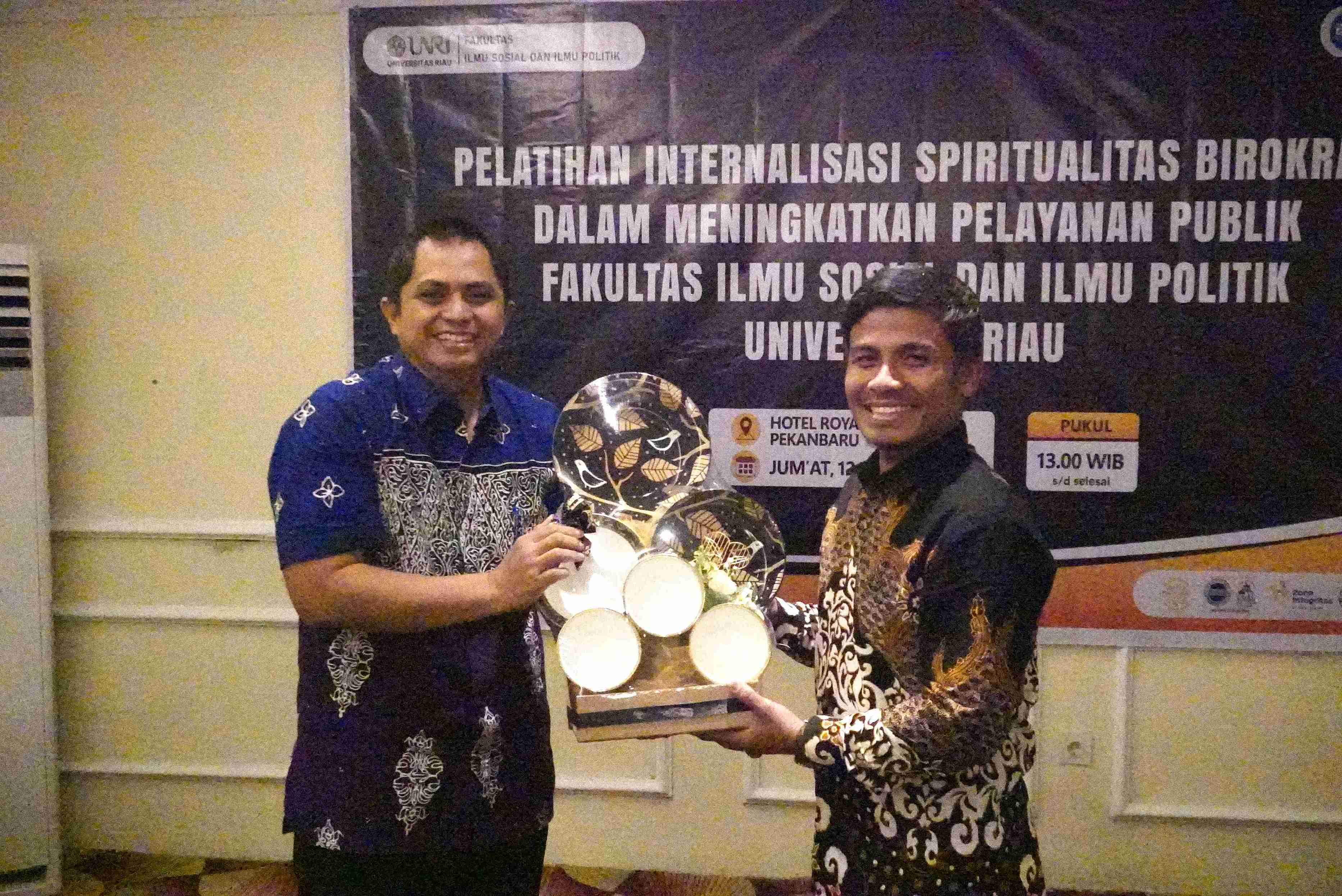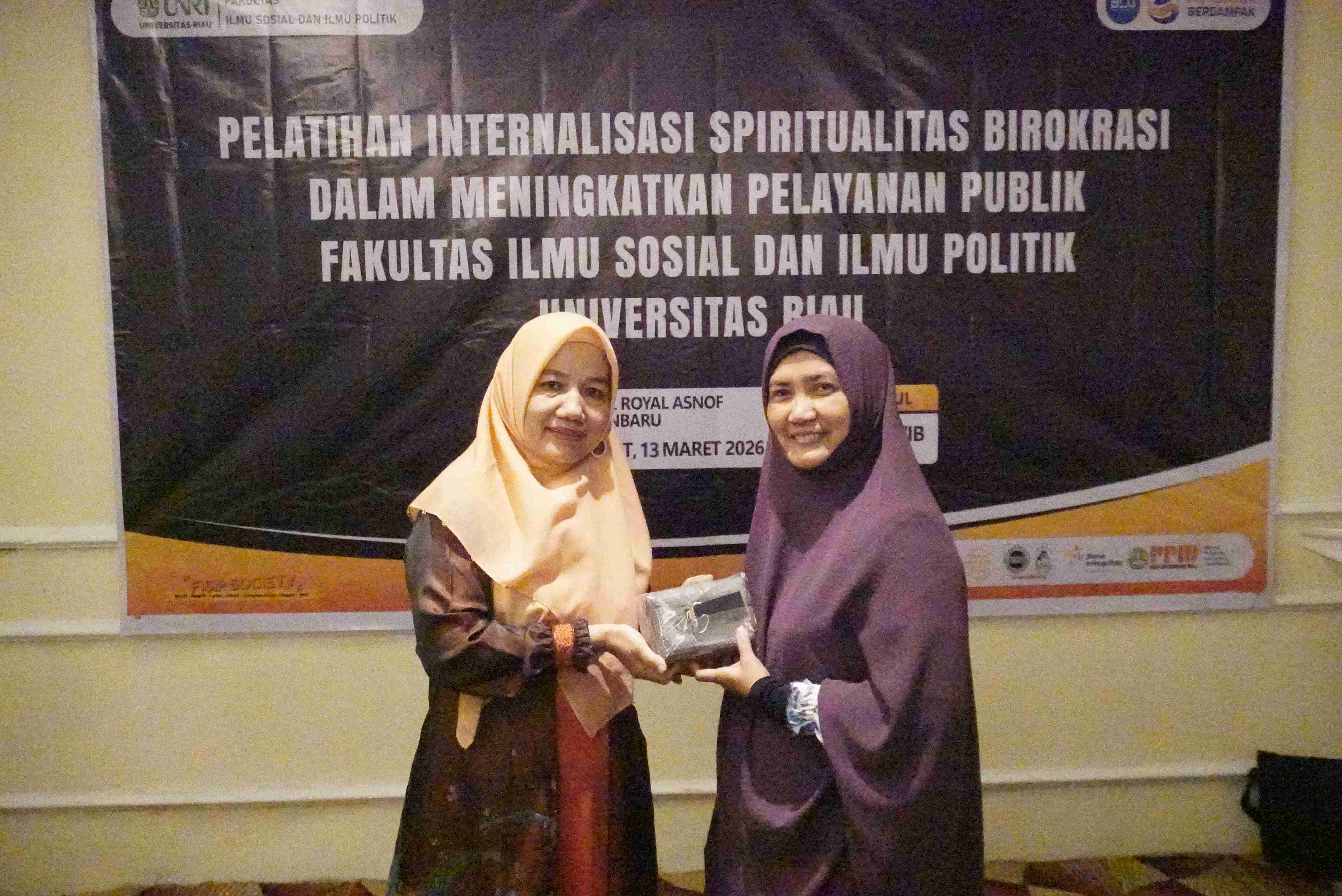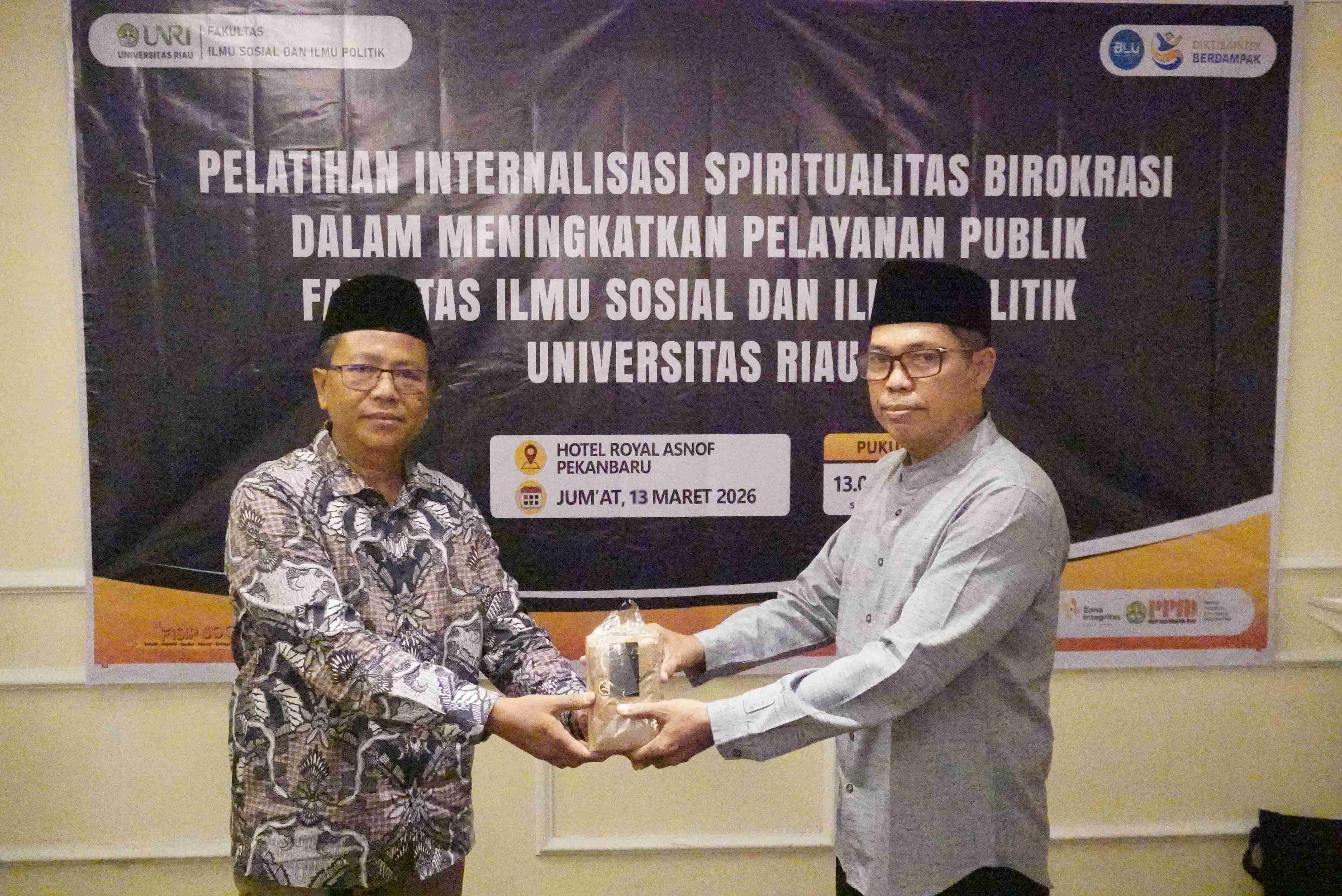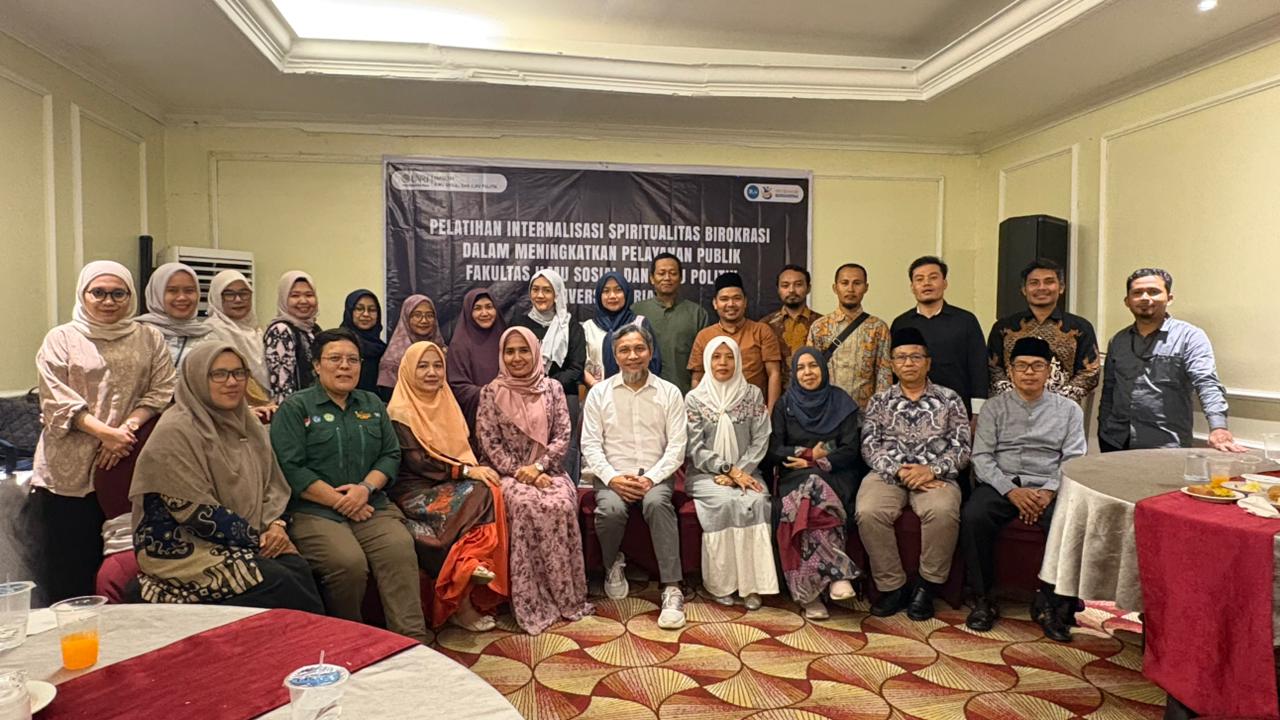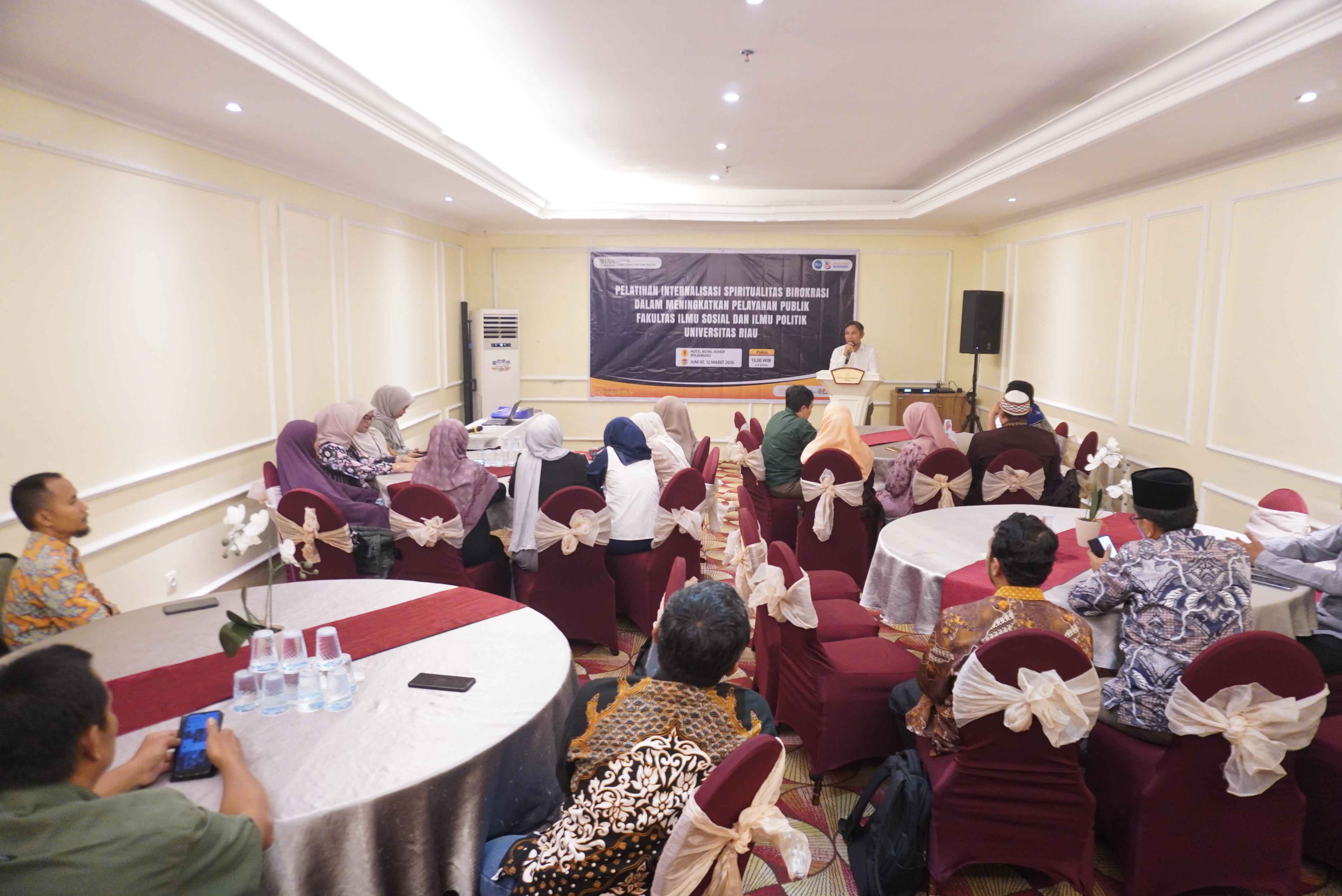
Pekanbaru, March 13, 2026 — The Faculty of Social and Political Sciences, Universitas Riau (FISIP UNRI), organized a Training on the Internalization of Bureaucratic Spirituality in Enhancing Public Services at Royal Asnof Hotel Pekanbaru on Friday (March 13, 2026). This activity is part of FISIP UNRI’s effort to strengthen the quality of public services by reinforcing spiritual values, work ethics, and the character of institutional staff within the faculty.
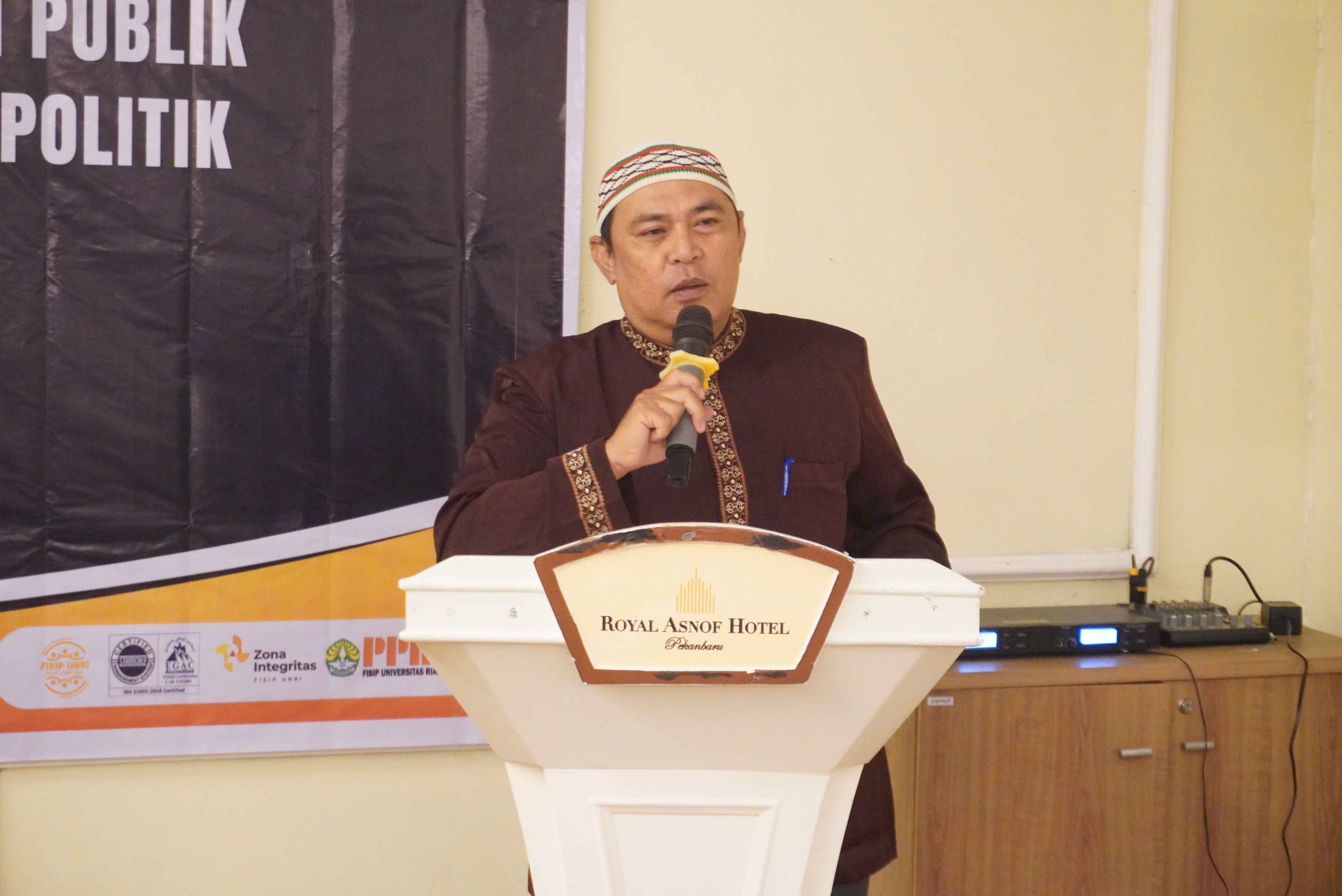
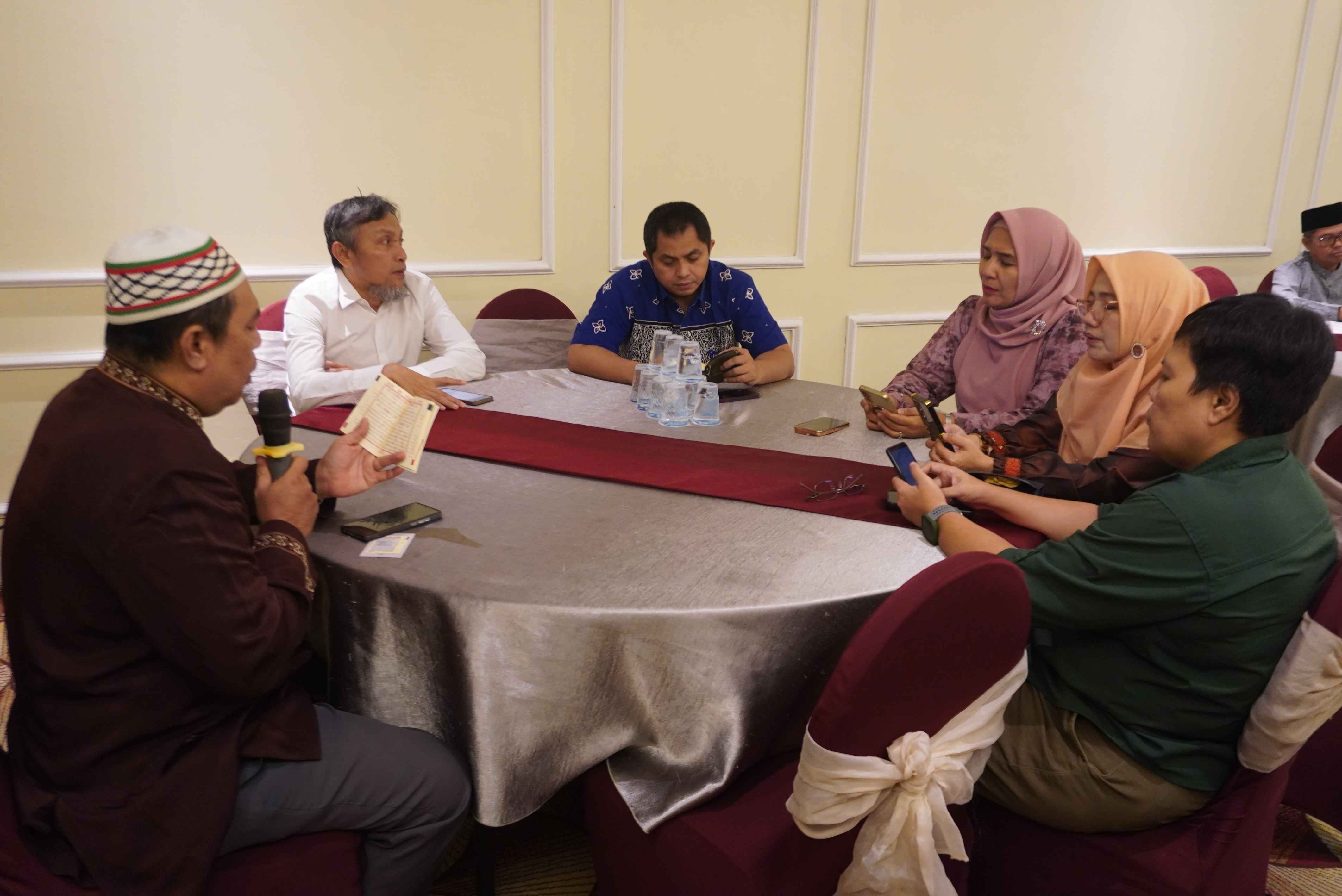
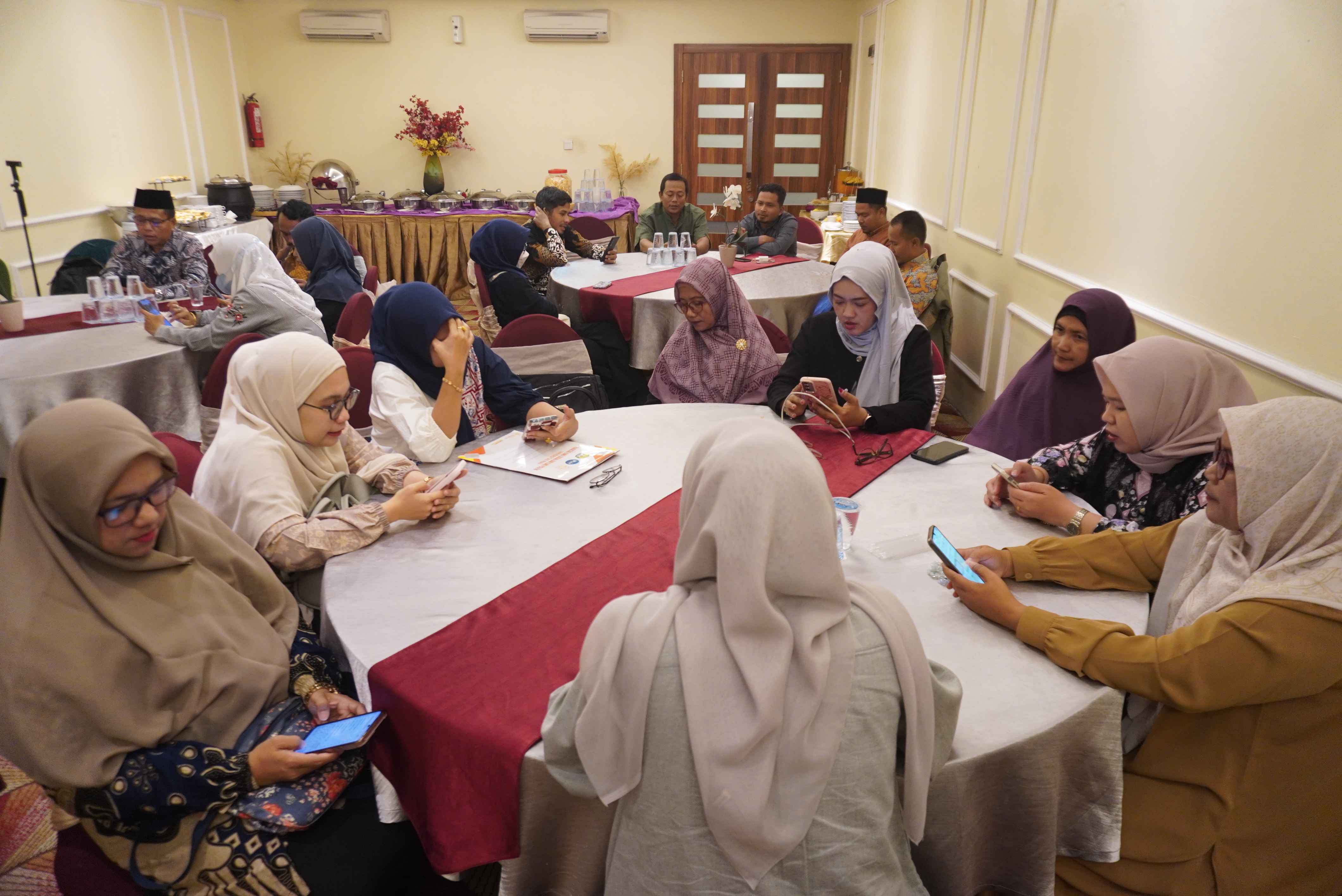
The training was attended by the Dean of FISIP UNRI, Dr. Meyzi Heriyanto, S.Sos., M.Si., Vice Dean for Academic Affairs Dr. Auradian Marta, S.IP., M.A., Vice Dean for Finance and General Affairs Dr. Mayarni, S.Sos., M.Si., the Head of the General Affairs Division, Heads of Working Groups, the Head of PPID FISIP UNRI, and administrative staff within FISIP UNRI. The keynote speaker was Ustadz Sofyan Hadi, S.IP., M.Si., who delivered a presentation on the importance of spirituality in shaping a bureaucratic culture that upholds integrity, trustworthiness, and service orientation.
In his remarks, the Dean of FISIP UNRI, Dr. Meyzi Heriyanto, emphasized that internalizing spiritual values within bureaucracy is essential for building institutional governance that is not only effective and professional but also grounded in morality and responsibility. According to him, high-quality public services are produced by personnel who are not only competent but also possess ethical awareness, integrity, and a strong sense of dedication.
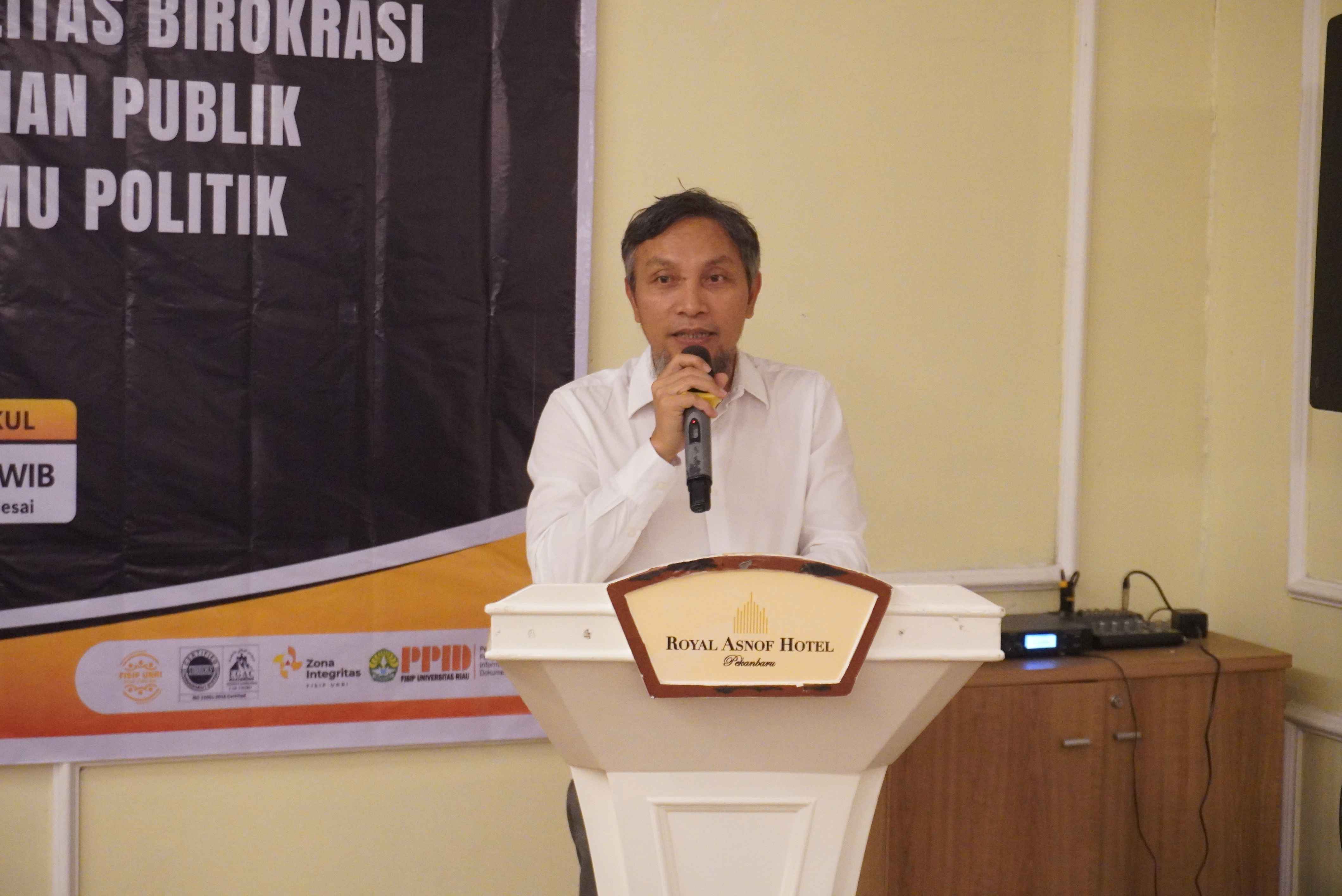
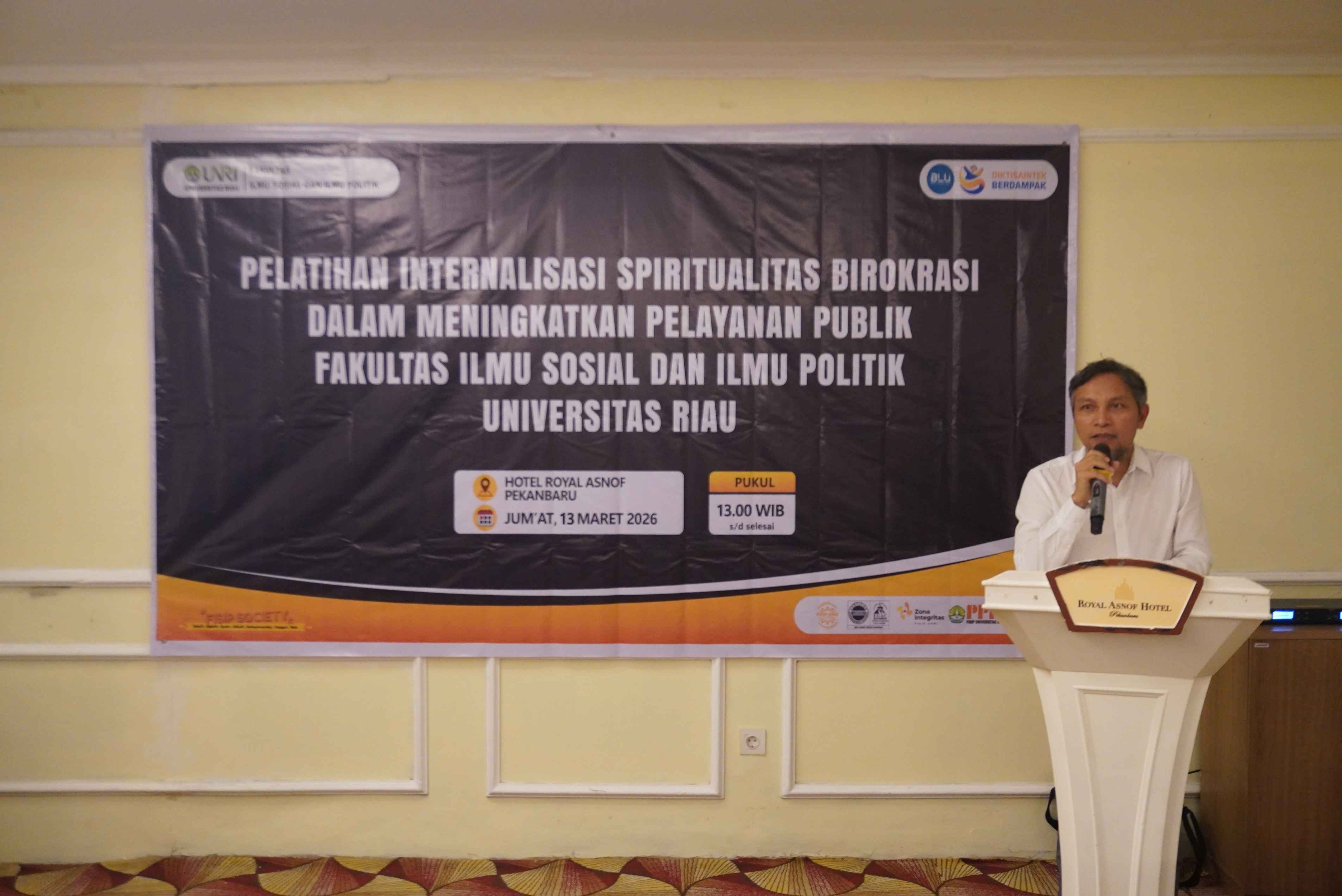
“This training aligns with the government’s policy direction to strengthen the character of civil servants through the core values of ASN BerAKHLAK. This is not merely a slogan, but a government program that must be translated into daily work behavior. BerAKHLAK stands for Service-Oriented, Accountable, Competent, Harmonious, Loyal, Adaptive, and Collaborative. These values are highly relevant to our efforts in building a campus bureaucracy that is humane, clean, professional, and service-oriented,” said Dr. Meyzi.
Dr. Meyzi added that strengthening bureaucratic spirituality is closely related to fostering a healthy work culture and empathetic service. According to him, when spiritual values are embedded within public servants, every duty and service will be carried out not merely as an administrative routine but also as a mandate that must be morally accounted for.
“Therefore, this activity is important to remind us that bureaucracy must not be devoid of values. Spirituality should become the foundation of our work, so that the public services we provide truly deliver benefits, sincerity, discipline, and responsibility to the community and all service users,” he added.
In his presentation, Ustadz Sofyan Hadi explained that spirituality in bureaucracy does not mean bringing institutions into purely ceremonial religious approaches, but rather instilling noble values such as honesty, discipline, responsibility, sincerity, and compassion in every aspect of duty. These values, he noted, serve as an important foundation in shaping public servants who are capable of carrying out their responsibilities professionally and with dignity.
The event was also accompanied by a collective khatam Al-Qur’an with the leadership and all administrative staff of FISIP UNRI, who had been conducting tadarus throughout the holy month of Ramadan. This activity symbolized a shared commitment to building a work environment that is not only productive but also spiritually meaningful, fostering togetherness and strengthening exemplary conduct within the campus bureaucracy.
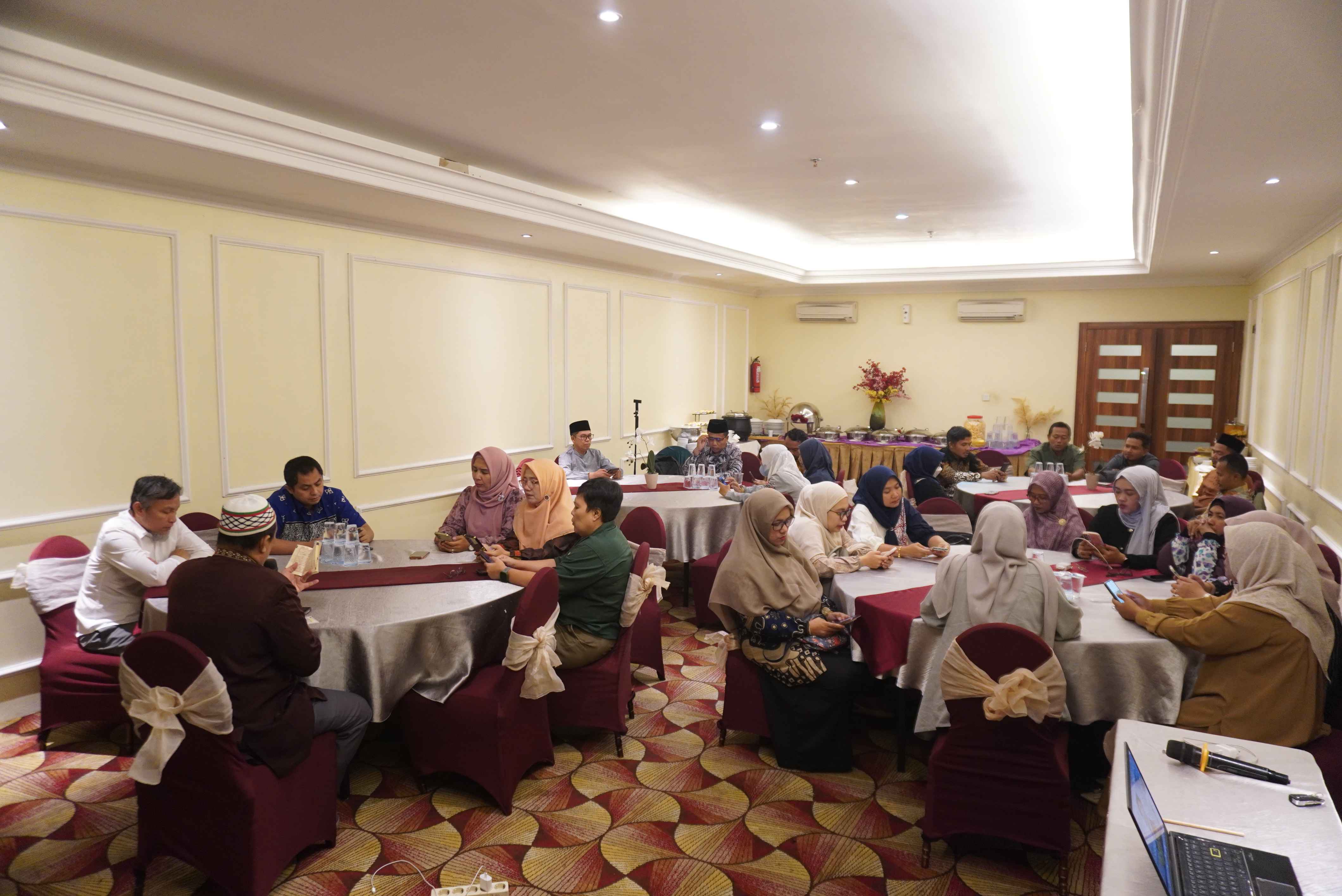
Through this initiative, FISIP UNRI hopes that the strengthening of spiritual values will continue to be internalized within the institutional work culture, thereby enhancing the quality of public services within the faculty to become more responsive to community needs while remaining grounded in integrity and humanitarian values.(RIRY, Photo: Enggy)